Welcome to the low impact community adventure...

... an occasional blog based on the research for a book of stories, 'The Ecology of Community' about an exploration of communities in the UK that are living lightly and lowering their carbon emissions...

It's a blog which hopes to connect inspiring and alternative stories about living lightly .. showing how our journey to a post-carbon future is one about inspiration, resourcefulness and creativity, and coming together, rather than fear and guilt and doom.

It documents my journey as I join with others to see how groups of people are taking power into their own hands, learning useful skills for a post-oil world

And, by looking at what communities are doing - not just intentional communities, but the concept of community: cooperative groups, structures, traditional and new communities, islands, housing estates, communities of interest and virtual communities - the journey will test the premise that cooperation - rather than competition - provides the most effective model for change.

It's all inspired by a lovely handbook called the 'Three Tonne Handbook', published by Women's Environmental Network, which shows groups of people how to reduce their emissions with handy sections for food, water, energy, waste and transport.

Monday, 12 April 2010

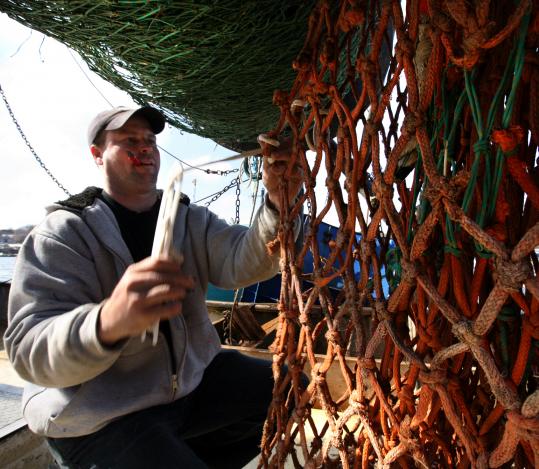
Community Supported Fisheries


Radio 4 profiling their success in east-coast US today...

Bit like a veggie box - but for fish. You get local fish, in season. Good for fishing industry, and for consumers.

There were noises from the Transition Town group in the East Neuk of Fife that they would be setting up something similar last autumn. I look forward to investigating soon.

Radio 4 link:
http://www.bbc.co.uk/programmes/b00rvy23

Article from Boston Times:
http://www.boston.com/lifestyle/food/articles/2009/03/18/economy_of_scales/

Thursday, 8 April 2010

Should communities be paid for allowing waste plants?

This is a proposal from an Inquiry by a Parliamentary Committee, according to a story by green news site Ecowise this week.

One suggestion is that communities should be able to own the waste sites.

How about they follow the example of Remade in Brixton and look at making money from reducing their waste?

Wednesday, 7 April 2010

Hyde Farm Group - going green and getting to know your neighbours

The inspiring work of Sue Sheehan's neighbourhood group 'Hyde Farm Climate Action Network' was profiled recently in The Guardian Society. I interviewed Sue for my book last autumn as she is closely involved with the work in Transition Town Brixton and is a part-time 'community champion' in Lambeth Council.

Sue says: A green scheme can provide a catalyst to bring people together as a group

Plastic Pollution

This recent story about health risks from plastics in the Indie highlights an issue Helen Lynn, Morag Parnell, and other wonderful campaigners have been working on without praise or publicity for many years. Congrats to all involved. Good to remember that there other environmental stories apart from climate change - and at the end of the day they are all linked...

Monday, 5 April 2010

Feasta - a collective thinking process

To continue thinking about the links between ecology and community... I was looking at the website of excellent Irish organisation Feasta, to feature in due course as one of the stories in my forthcoming book The Ecology of Community...

Feasta describes itself 'as a collective thinking process about the future' (feasta being an Irish word for future, taken from an early poem):

Cad a dheanfaimid feasta gan adhmad, ta deire na gcoilte air lar

What shall we do without wood, when all the forests are gone?


Their radical and sensible ideas include proposals on Cap and Share, a proposal to incentivise emitting less, and rewarding people, not companies in the process which has found currency (sorry) with the Irish Government and the UK's sustainable development commission.

Eminent economist Richard Douthwaite, who wrote the seminal titles The Growth Illusion and The Ecology of Money, is on the organisation's executive committe.

And it is of no coincidence, in my opinion, that it is such a non-hierarchical, participatory organisation, that is coming up with some of the most ground-breaking ideas to look at new systems of economics for a sustainable future.

Sustainability is a community practice

The Ecology of Community: what does it mean?

I must confess I was taken with the phrase 'ecology of community' as used by master-baker Andrew Whitley when describing his courses in community baking (see previous blog post). It seemed like a perfect title for my book. But I felt stumped for a definition.

So it was nice to come across the Centre for Ecoliteracy site, an organisation based in California, and some of their essays and thinking. They put it better than I could:

The sustainability of a community depends on the health and inclusiveness of the network of relationships within it.

Read more about the Centre for Ecoliteracy's work including resources for teachers, courses in 'knowing your place', 'collaborative decision-making' and more...

Community Supported Baking

You've maybe - like me - heard of Community Supported Agriculture before, but have you heard of Community Supported Baking?

Renowned Bread-maker Andrew Whitley, author of Bread Matters: why and how to make your own, is running courses in 'Baking for Community' (as well as standard 2-day courses) from a new site in Lamancha in the Scottish Borders, just down the road from Pete and Heather Ritchie and the wonderful Whitmuir Organics.

Andrew says:

At a time of recession, bank failures and climate conferences, there is much talk of ‘defining moments’, points after which things will never be (or seem) the same. While many (especially the unemployed and the hungry) ache for governments to act more decisively to stem threats to human wellbeing, some people are making their own provision for a changed world.


They’ve spotted that a global free-for-all that tramples the weak and ignores ecological limits won’t put bread on the table for good. So they are, in ever greater numbers, taking matters into their own hands. Home growing, preserving, making and baking are on the increase. Doing it yourself isn’t just a vote against processed pap, with its bland textures, hidden additives and nature-defying shelf-life. It’s a big step towards reasserting some control over how we feed ourselves and our families.


Taking control - and the ecology of community - defining ideas at the centre of The Low Impact Adventure